
Empowering Neurodiverse Learners
with Adaptive Lessons
Timeline
8 week Sprint - Phase 4
June 2025
Type of product
App
Client
Anne Cantera
through
TechFleet
Teams
Nikhil Cheerla (Design Co-lead)
Emily Lange (Design Co-lead)
Research, UX Writing, Product Management &
Product Strategy teams
BeNDy Math had the right heart, but the wrong script. Entering Phase 4, we realized the existing product vision wasn't fully serving our students or our stakeholders. I co-led a team of four to orchestrate a total brand and experience pivot—transforming a standard learning app into a research-backed, multi-modal sanctuary for ADHD learners.
The Turning Point
beNDY Math (formerly known as Mindful Digits) is an adaptive math platform for neurodivergent students, especially those with ADHD. Phases 1–3 built the foundation, but the "Real World" feedback was clear: it wasn't enough. Our stakeholder, Anne Cantera, challenged us to rethink everything—from the emotional tone to the very structure of how math is taught.
Why this phase (4) was Different:
-
From 'Assumed' to 'Research-Backed': We moved away from generic learning flows toward a specialized, multi-modal approach specifically for ADHD needs.
-
The Strategic Rebrand: I spearheaded a shift in the overall emotional tone—moving from a 'standard classroom' feel to a supportive, adaptive environment.
-
Heuristic #2 Application: We audited the "System" to ensure it matched the Real-World way neurodivergent students process information: in small, sensory-rich, and non-linear bursts.
Phase 3 - OLD
This Phase
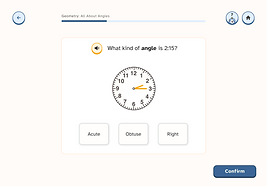
Muti-modal learning


User Problem
Math learning tools are often rigid, failing to honor neurodiverse students’ preferred modes of learning (visual, kinesthetic, story-based). This inflexibility leaves these students disengaged and unsupported.
Stakeholder Problem
After three phases, both leadership and users felt the product needed to be more adaptive, emotionally supportive, and distinctive. The stakes were high: Anne requested deep changes to naming, branding, and lesson design mid-project, demanding our team pivot —without losing sight of research-backed priorities.
Our Mission in Phase 4
Refine the MVP scope specifically around the student lesson experience.
Design and prototype a new, adaptive lesson framework (“Recognizing Angles”).
Integrate branding, mascot, and emotional tools to boost student support and engagement.
Align all teams: Cross-functional work with UX research, writing, and product leads.
Discovery & the Major Pivot
Early Plan
We initially envisioned giving students complete control: they’d pick their preferred learning mode (visual, kinesthetic, or story) for each lesson. This seemed empowering and aligned with neurodiversity principles.
Research Insight
Interviews with teachers and occupational therapist feedback transformed our thinking:
-
Choice paradox: Having to select a mode at the start actually added anxiety and cognitive load, instead of reducing it, especially considering that neurodivergent kids get easily bored.
-
Blended wins: Lessons that naturally mix visual, kinesthetic, and story elements (without explicit user selection) proved significantly better for engagement and comprehension.
The Pivot
Midway, we merged learning modes by default, focusing on fluid, low-effort progression for students.
Designing the New Experience
Key Approaches:
Mascot & branding: Introduced Bendy the Octopus to embody flexibility and support

Emotional check-ins: Frequent, light-touch prompts and celebration screens
kept students encouraged.
Breaks half way through a lesson, help neurodivergent student deal with
the problem of distractions. Instead of fighting it the solution
we came up with in phase 4 helps channel it proactively.


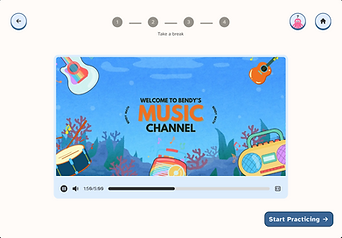

4-Step Adaptive Template: Kickoff → Train → Challenge → Reflect.
Used throughout "Recognizing Angles" MVP.

Challenges - Navigating the Storm
Phase 4 wasn't just a design challenge; it was an operational one. As a Co-Lead, I had to manage a late-stage brand pivot while holding the team together through sudden turnover and communication silos.
1. The Late-Stage Pivot (The Heuristic Audit)
Midway through the sprint, our stakeholder called for a total rethink of the brand and lesson structure.
-
The Action: Instead of resisting, I organized an emergency cross-functional workshop.
-
The Outcome: We realigned the product, research, and design teams in 48 hours, ensuring no effort was duplicated and the "System" finally matched the Real-World cognitive needs of our ADHD learners.
2. Resilience through Turnover
When two designers left during key sprints, it threatened our delivery timeline.
-
The Action: I restructured our workflow, shifting focus to "Must-Have" features and creating a Robust Documentation System to bridge the hand-off gaps.
-
The Outcome: We met our deadline without sacrificing the integrity of the design.
3. Closing the Communication Loop
Initially, research findings were getting lost in translation between the writing and design teams.
-
The Action: I stepped in to facilitate direct feedback loops, moving us away from contradictory comments and toward Data-Verified Decisions.
-
The Reflection: "This was a moment for humility. I realized we could have done better, so I pushed the team to rely exclusively on verified research data to settle our design disputes."

Results & Reflection: Building the Foundation
While Phase 4 was a race against time and turnover, the result was a product that moved from "generic" to "expert-validated." We didn't just design an app; we designed a safe learning sanctuary.
The Expert Seal of Approval
We presented our multi-modal lesson templates and emotional check-in flows to occupational therapists. Their feedback was clear: the new branding and scaffolding aren't just "fun"—they are clinically supportive for students with ADHD.
Operational Readiness
We successfully transitioned the project from a messy sprawl into a disciplined system.
-
A Bespoke Design System: Built for scalability and visual calm.
-
Research-Backed Scaffolding: Moving beyond rote learning to sensory-rich engagement.
-
The Phase 5 Hand-off: While we faced recruitment hurdles for end-user testing, we delivered a "Research Transition Kit" that ensures Phase 5 can hit the ground running with zero friction.
Sometimes the best way to support a student isn't by giving more choice—but by removing unnecessary hurdles. My time as Co-Lead taught me that UX is as much about discipline and empathy as it is about design.
Thank you for giving it a read!
Any feedback would be appreciated.
Nikhil Cheerla